

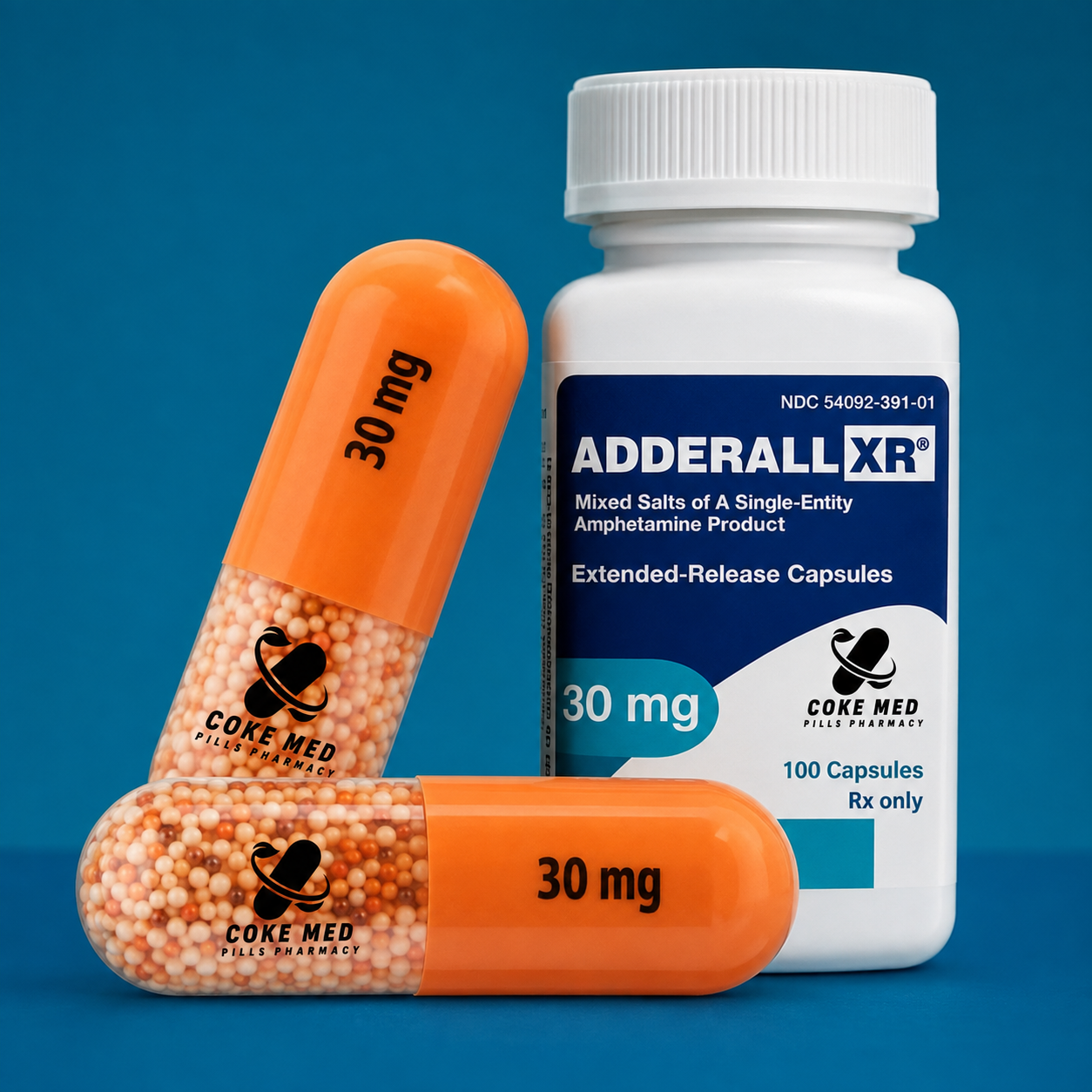


Buy Adderall 30mg Tab Online
Buy Adderall 30mg Tab Online contains a combination of amphetamine and dextroamphetamine, which belong to the central nervous system stimulant class. Healthcare professionals prescribe Adderall for conditions such as attention-deficit/hyperactivity disorder (ADHD) and narcolepsy. The medication increases activity involving neurotransmitters such as dopamine and norepinephrine, which influence attention, alertness, and executive function.
Adderall 30 mg represents one available tablet strength. Because amphetamine stimulants carry risks of misuse, addiction, overdose, and other serious effects, patients should use them only under appropriate medical supervision.
How Adderall Works
Adderall increases the activity of dopamine and norepinephrine in the brain and nervous system. These neurotransmitters help regulate attention, motivation, alertness, and impulse control.
For people with ADHD, appropriate stimulant treatment may improve concentration and reduce hyperactivity and impulsivity. For people with narcolepsy, stimulant treatment can promote wakefulness.
Healthcare professionals determine the appropriate medication and dose according to each patient’s symptoms, medical history, treatment response, and other medications.
Medical Uses of Adderall
Healthcare professionals may prescribe Adderall for:
- Attention-deficit/hyperactivity disorder
- Narcolepsy
The FDA-approved labelling identifies Adderall as a prescription medication for these conditions.
Doctors evaluate patients before prescribing stimulant medication and continue to monitor treatment over time.
Potential Benefits
When prescribed appropriately, Adderall may help eligible patients:
- Improve attention
- Reduce impulsive behaviour
- Reduce hyperactivity associated with ADHD
- Improve wakefulness in narcolepsy
- Support daily functioning
- Improve concentration during school or work activities
Medication often works best as part of a broader treatment plan that may include behavioural strategies, counselling, educational support, and healthy routines.
Proper Use
Patients should take Adderall exactly as their healthcare professional prescribes. They should never increase the dose, change the schedule, or use another person’s medication without medical advice.
The FDA specifically advises patients not to share prescription stimulants. Patients should also store their medication securely and dispose of unused medicine appropriately.
Common Side Effects
Adderall can cause side effects. Common effects may include:
- Reduced appetite
- Difficulty sleeping
- Headache
- Stomach discomfort
- Nervousness
- Irritability
- Increased heart rate
- Increased blood pressure
The FDA lists appetite loss, sleep problems, headache, stomachache, irritability, fast heart rate, and elevated blood pressure among potential effects associated with prescription stimulants.
Patients should discuss persistent or troublesome symptoms with their healthcare provider.
Serious Health Risks
Prescription stimulants can cause serious complications, particularly when people misuse them or take them in ways that healthcare professionals do not recommend.
Potential serious problems include:
- Severe cardiovascular effects
- Dangerous increases in blood pressure
- Abnormal heart rhythm
- Severe agitation
- Psychotic symptoms
- Seizures
- Overdose
The FDA warns that stimulant misuse and abuse can result in overdose and death, with higher doses and unapproved methods of administration increasing the risk.
Anyone experiencing severe chest pain, difficulty breathing, loss of consciousness, seizures, or severe confusion should seek emergency medical care.
Adderall and Dependence
Adderall has a high potential for misuse, abuse, and addiction. Repeated non-medical use can lead to substance use disorder. The FDA requires prominent warnings about these risks for prescription stimulants.
Patients should never share their medication or use it for purposes that differ from their prescribed treatment plan.
Drug Interactions
Adderall can interact with other medicines and substances. Patients should tell their healthcare provider about every prescription medicine, over-the-counter product, supplement, and other substance they use.
Healthcare professionals pay particular attention to interactions involving:
- Monoamine oxidase inhibitors (MAOIs)
- Other stimulant medicines
- Certain antidepressants
- Blood-pressure medications
- Medicines that affect neurotransmitter activity
A complete medication review helps healthcare professionals reduce interaction risks.
Cardiovascular Considerations
Stimulant medications can increase heart rate and blood pressure. Patients with certain cardiovascular conditions may need additional evaluation before beginning treatment.
Healthcare providers may monitor blood pressure, pulse, and other health indicators during treatment. Patients should promptly report chest pain, fainting, severe shortness of breath, or unusual heart palpitations.
Adderall and Sleep
Because Adderall stimulates the central nervous system, it can interfere with sleep. Some patients may experience difficulty falling asleep or staying asleep.
Patients should follow their healthcare professional’s instructions regarding medication timing rather than changing the schedule independently.
Adderall and Appetite
Reduced appetite can occur during stimulant treatment. Healthcare professionals may monitor weight, nutrition, and growth, particularly when treating children and adolescents.
Patients should discuss significant appetite changes or unexpected weight loss with their healthcare provider.
Frequently Asked Questions
What does Adderall treat?
Healthcare professionals prescribe Adderall primarily for ADHD and narcolepsy.
Is Adderall a stimulant?
Yes. Adderall contains amphetamine and dextroamphetamine, both central nervous system stimulants.
Can Adderall cause dependence?
Yes. Adderall carries a significant risk of misuse, abuse, and addiction, which makes medical supervision important.
Can Adderall affect sleep?
Yes. Difficulty sleeping can occur because Adderall stimulates the central nervous system.
Should someone share Adderall with another person?
No. The FDA specifically advises patients not to share prescription stimulants.
Supporting ADHD Management
Medication represents only one component of comprehensive ADHD care. Patients may also benefit from structured routines, organisational strategies, behavioural therapy, counselling, educational accommodations, regular exercise, adequate sleep, and family support.
A healthcare professional can develop an individualised treatment plan based on symptoms, age, health status, and treatment response.
Conclusion
Adderall 30 mg contains a combination of amphetamine and dextroamphetamine and represents one prescription strength used in stimulant treatment. Healthcare professionals prescribe Adderall for ADHD and narcolepsy when they determine that the medication suits the patient.
Although prescription stimulants can provide important medical benefits, they also carry significant risks, including misuse, addiction, cardiovascular effects, overdose, and other serious complications. Patients should use Adderall only according to professional medical advice, never share their prescription, and seek medical attention for serious or unexpected symptoms.
Contact Us
1 review for Buy Adderall 30mg Tab Online
Add a review
Related products

Pills-Meds
Pills-Meds
Pills-Meds
Pills-Meds
Pills-Meds
Pills-Meds

Pills-Meds
Pills-Meds
Kewipo –
Better than expected! The experience was easy, professional, and hassle-free from beginning to end. Everything felt well organized, and I’m very happy with the overall service.