

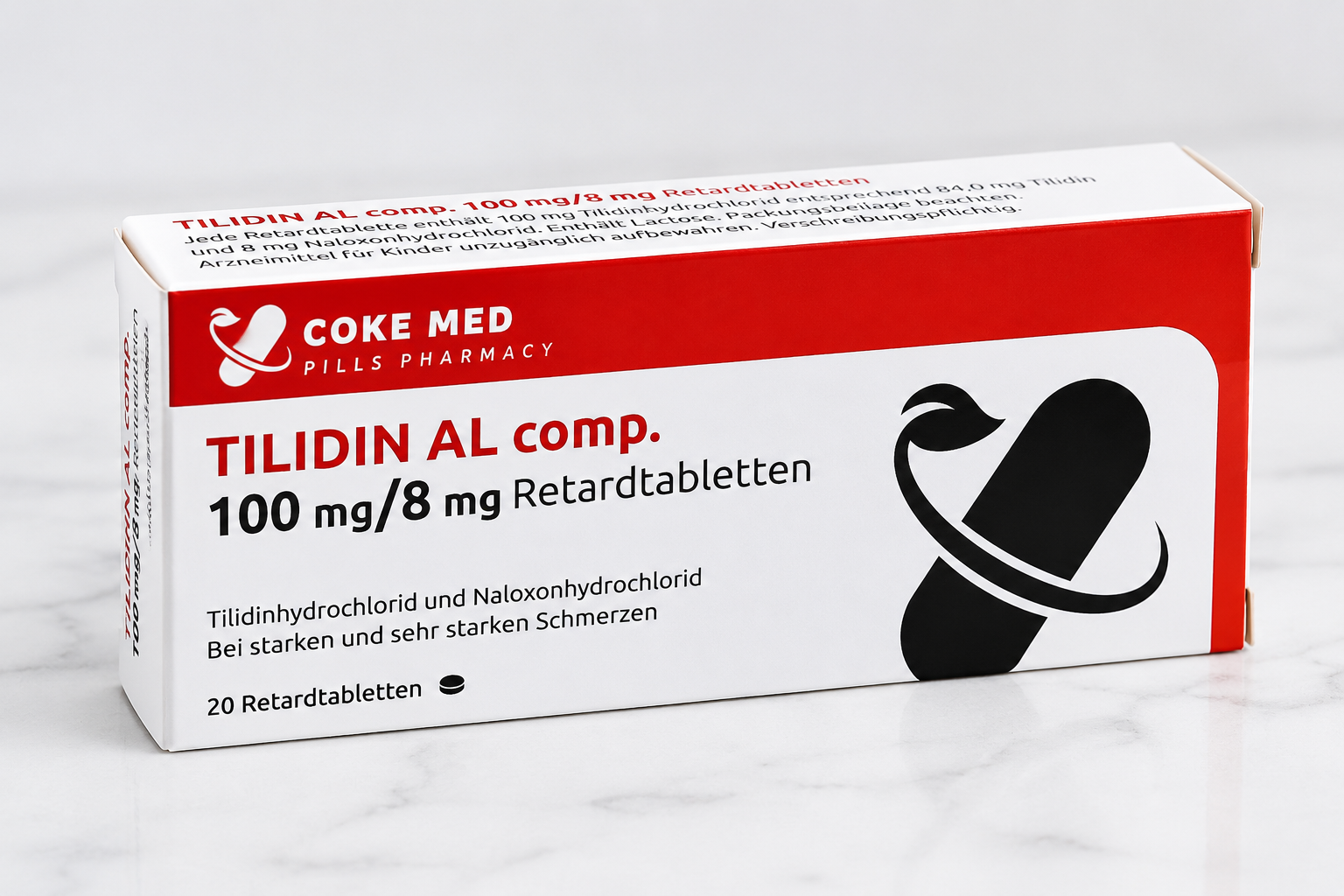

Buy Tilidin Tab Online
Buy Tilidin Tab Online, also spelt tilidine, is an opioid analgesic that doctors use in some countries to manage moderate to severe pain. It acts on opioid receptors in the central nervous system and changes how the body perceives and responds to pain.
Some formulations combine tilidine with naloxone, an opioid antagonist. The exact formulation, availability, and legal status vary by country. Patients should use tilidine only under appropriate medical supervision.
How Tilidin Works
Tilidine undergoes metabolism in the body to produce active compounds that contribute to its analgesic effects. These compounds interact with opioid receptors and reduce the perception of pain.
Because opioid medicines can affect breathing, alertness, and coordination, healthcare professionals carefully consider a patient’s medical history and other medications before recommending treatment.
Medical Uses of Tilidin
Healthcare professionals may prescribe tilidine-containing medicines for certain types of moderate to severe pain.
Doctors consider factors such as:
- The severity and cause of pain
- Previous pain treatments
- Other medicines
- Kidney and liver function
- Respiratory health
- Previous opioid exposure
The appropriate formulation and treatment plan depend on the individual patient and local medical guidelines.
Potential Benefits
When a healthcare professional determines that tilidine represents an appropriate treatment, it may help:
- Reduce moderate to severe pain
- Improve comfort during painful conditions
- Support mobility when pain limits movement
- Improve daily functioning when pain interferes with normal activities
Doctors generally aim to use the lowest effective opioid exposure for the shortest clinically appropriate period.
Common Side Effects
Tildiemide and other opioid medicines can cause side effects. Possible effects include:
- Drowsiness
- Dizziness
- Nausea
- Vomiting
- Constipation
- Headache
- Reduced alertness
- Sweating
Patients should discuss persistent or troublesome symptoms with their healthcare professional.
Serious Risks
Opioids can cause serious complications, particularly after excessive use or when combined with other substances that depress the central nervous system.
Important warning signs include:
- Slow or shallow breathing
- Extreme sleepiness
- Confusion
- Loss of consciousness
- Severe dizziness
- Bluish lips or skin
- Severe allergic reactions
Respiratory depression represents a major danger associated with opioid overdose. Anyone who develops severe breathing problems or loses consciousness after taking an opioid requires emergency medical attention.
Tilidin and Dependence
Regular opioid use can lead to tolerance, physical dependence, and addiction. Tolerance means that the body may respond less strongly to the same amount over time. Dependence means that the body adapts to the medicine and may produce withdrawal symptoms when treatment stops.
Signs that may indicate problematic opioid use include taking more than prescribed, using the medicine for reasons other than pain management, or repeatedly trying and failing to control use. Opioid medicines can also produce life-threatening overdose when people misuse them.
Patients who take tilidine regularly should speak with their healthcare professional before stopping treatment.
Withdrawal Symptoms
People who develop physical dependence may experience withdrawal after abruptly stopping an opioid.
Possible symptoms include:
- Restlessness
- Anxiety
- Irritability
- Sweating
- Shaking
- Sleep difficulties
- Nausea
- Vomiting
- Diarrhea
- Muscle discomfort
A healthcare professional can recommend an appropriate plan for reducing treatment when discontinuation becomes appropriate. Patients should avoid making major dose changes independently.
Drug Interactions
Tilidine can interact with medicines and substances that affect the central nervous system.
Important examples include:
- Alcohol
- Benzodiazepines
- Sleeping medicines
- Other opioid medicines
- Certain sedating antihistamines
- Other central nervous system depressants
Combining opioids with other sedating substances can increase drowsiness and respiratory-depression risks. Patients should provide their doctor or pharmacist with a complete list of medicines, supplements, and other substances they use.
Tilidin and Alcohol
Patients should avoid combining opioid medicines with alcohol unless a healthcare professional specifically provides appropriate medical guidance.
Alcohol can intensify sedation and impair coordination. The combination may also increase the risk of dangerous breathing problems.
Driving and Operating Machinery
Tilidine can cause dizziness, sleepiness, and reduced alertness. These effects can impair driving and other activities that require concentration and quick reactions.
Patients should understand how the medicine affects them before driving or operating machinery and should follow their healthcare professional’s advice.
Who May Need Extra Caution?
Certain health conditions can increase opioid-related risks. Patients should tell their healthcare provider if they have:
- Breathing problems
- Sleep-related breathing disorders
- Liver disease
- Kidney disease
- A history of seizures
- Head injuries
- Low blood pressure
- A history of substance dependence
Healthcare professionals can determine whether tilidine represents a suitable treatment option.
Safe Use of Prescription Opioids
Patients can reduce medication risks by following several basic principles:
- Take the medicine exactly as prescribed.
- Never take another person’s prescription.
- Never increase the dose independently.
- Keep medication away from children and other unauthorised users.
- Tell healthcare professionals about all current medicines.
- Attend recommended follow-up appointments.
- Ask a doctor before changing or stopping regular treatment.
These measures help healthcare professionals identify problems early and adjust treatment when necessary.
Frequently Asked Questions
Is tilidine an opioid?
Yes. Tilidine belongs to the opioid analgesic class and can produce opioid-related effects, including pain relief and sedation.
Can tilidine cause addiction?
Yes. Regular opioid use can cause tolerance, dependence, and addiction. The risk varies between individuals and can increase with prolonged or inappropriate use.
Can tilidine cause breathing problems?
Yes. Opioids can suppress breathing, particularly after excessive use or when combined with other central nervous system depressants. Severe breathing difficulty requires immediate medical attention.
Can someone stop tilidine suddenly?
People who use tilidine regularly should consult their healthcare professional before stopping. Abrupt discontinuation can cause withdrawal symptoms in people who have developed physical dependence.
Can alcohol interact with tilidine?
Yes. Alcohol can increase opioid-related sedation and other risks. Patients should discuss alcohol use with their healthcare provider.
Conclusion
Tilidine is an opioid pain medicine that healthcare professionals use in some countries to manage moderate to severe pain. It can provide meaningful pain relief for appropriate patients, but it also carries important risks, including drowsiness, respiratory depression, tolerance, dependence, withdrawal, and addiction.
Patients should use tilidine only under qualified medical supervision, follow their prescribed treatment plan carefully, avoid potentially dangerous combinations with alcohol or sedatives, and seek urgent medical attention for severe breathing problems, extreme drowsiness, or loss of consciousness.
Contact Us
1 review for Buy Tilidin Tab Online
Add a review
Related products

Pills-Meds

Pills-Meds

Pills-Meds
Pills-Meds
Pills-Meds
Pills-Meds

Pills-Meds
Pills-Meds
Teyore –
Great experience overall! I appreciated the quick communication and careful packaging. The whole process was hassle-free.