
Buy Fentanyl Test Strips Online
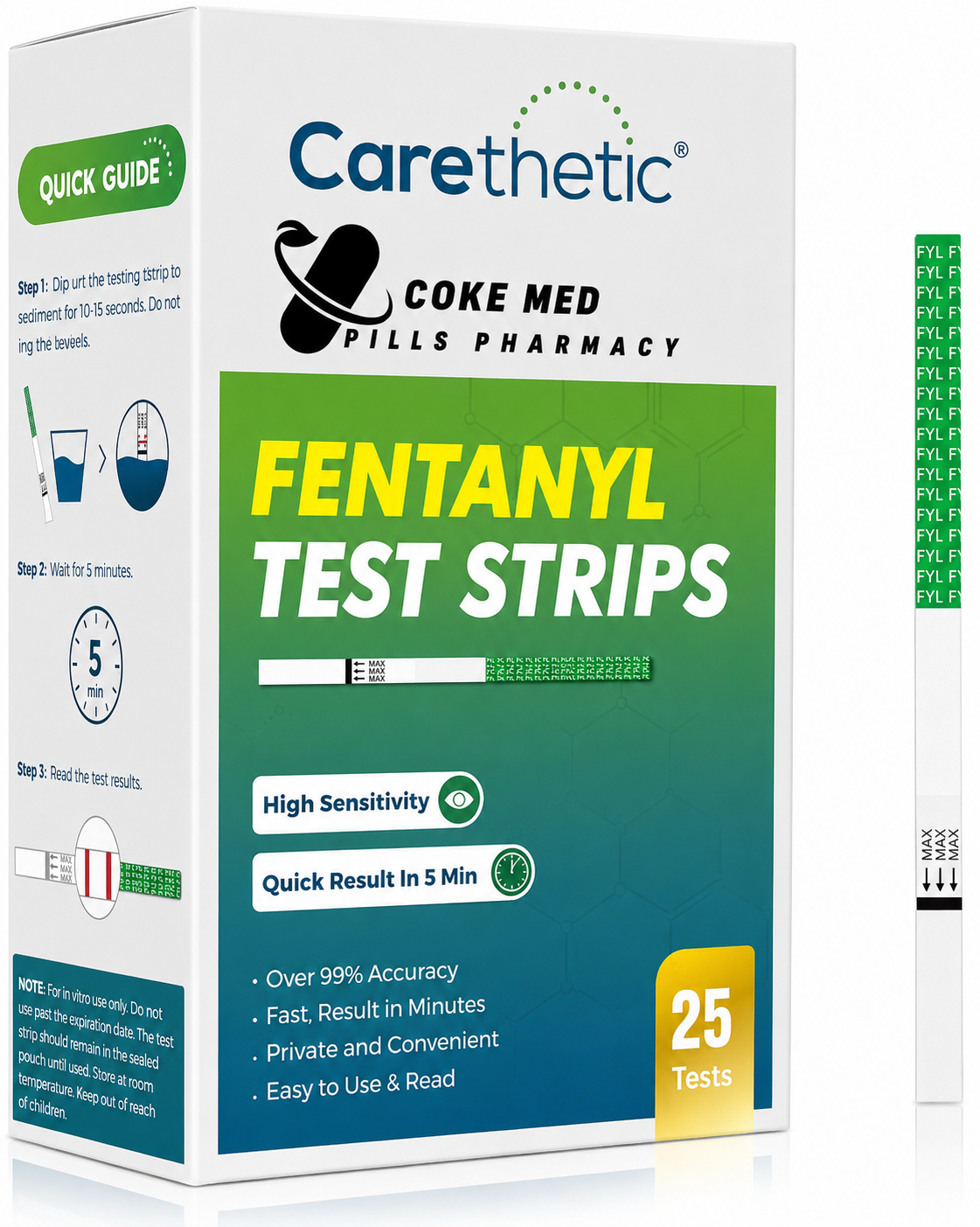
Buy Fentanyl Test Strips Online (FTS) provide a simple way to check a liquid sample for the presence of fentanyl, a powerful synthetic opioid. People and harm-reduction organisations use FTS as one tool to identify unexpected fentanyl contamination in drugs.
Fentanyl can cause life-threatening respiratory depression at very small amounts. Illicit drug supplies can also contain fentanyl without a person knowing about it. Test strips can therefore provide useful information, although a negative result does not guarantee that a sample contains no fentanyl.
Why Fentanyl Test Strips Matter
Fentanyl contamination creates a major overdose risk because people may not know what a drug actually contains. Fentanyl can appear in unexpected drug supplies, including substances sold as heroin, cocaine, methamphetamine, or counterfeit prescription pills.
FTS can help people make more informed decisions about potential exposure. They work best as one part of a broader harm-reduction approach rather than as a guarantee of safety.
How Fentanyl Test Strips Work
Most fentanyl test strips use immunoassay technology. The strip detects fentanyl or related compounds in a prepared liquid sample.
A typical process involves:
- Preparing a small sample according to the strip manufacturer’s instructions.
- Diluting the sample appropriately.
- Placing the test strip into the prepared liquid.
- Waiting for the specified development period.
- Reading the result within the manufacturer’s recommended time window.
Different products can have different instructions, so users should always follow the specific manufacturer’s directions.
Understanding Test Results
A test strip can produce a preliminary indication of whether fentanyl-related compounds appear in the tested sample.
However, users should understand several limitations:
- A negative result cannot guarantee safety.
- Unevenly distributed fentanyl can produce misleading results.
- Some fentanyl analogues or related substances may not produce the same response.
- Incorrect dilution can affect results.
- Contamination or improper testing can produce inaccurate results.
- A test strip does not determine the amount of fentanyl present.
For these reasons, people should never interpret a negative test as proof that a drug carries no overdose risk.
Fentanyl Test Strips and Harm Reduction
Harm reduction focuses on reducing the risk of serious injury or death. Fentanyl test strips represent one component of that approach.
Other important measures include:
- Avoiding solitary drug use.
- Keeping naloxone available where legally accessible.
- Learning the signs of opioid overdose.
- Calling emergency medical services during an overdose.
- Avoiding combinations of opioids with alcohol or sedatives.
- Seeking professional support for problematic substance use.
No testing method can eliminate the risks associated with illicit drug use.
Why Naloxone Matters
Naloxone can rapidly reverse an opioid overdose by blocking opioid receptors. People who spend time around opioids may benefit from learning how naloxone works and how to administer it.
Signs of an opioid overdose can include:
- Very slow or stopped breathing
- Inability to wake up
- Very small pupils
- Blue, grey, or pale lips or skin
- Gurgling or choking sounds
- Limpness
If someone shows signs of an opioid overdose, seek emergency medical help immediately and administer naloxone if available and appropriate. Continue following emergency responders’ instructions.
Limitations of Fentanyl Test Strips
FTS provide useful information, but they cannot identify every dangerous substance.
A strip generally answers a narrow question: does the tested sample produce a detectable response for fentanyl-related compounds under the test conditions?
It does not provide a complete chemical analysis.
FTS cannot reliably determine:
- The complete contents of a sample
- The exact potency of a substance
- The precise fentanyl concentration
- Whether another dangerous substance exists
- Whether the entire supply has uniform composition
Users should consider these limitations when interpreting results.
Safe Storage and Handling
People should store test strips according to the manufacturer’s instructions. Keeping them dry and protected from extreme temperatures can help preserve their performance.
Users should also avoid contaminating test materials and should carefully follow the manufacturer’s directions for sample preparation and interpretation.
Who Uses Fentanyl Test Strips?
Various harm-reduction programs, community organisations, public-health services, and individuals use fentanyl test strips to identify potential fentanyl exposure.
Healthcare and community organisations may also provide education about overdose prevention, naloxone, substance-use treatment, and safer practices.
Frequently Asked Questions
Do fentanyl test strips guarantee safety?
No. A test strip cannot guarantee that a sample contains no fentanyl or other dangerous substances.
Can fentanyl test strips determine potency?
No. FTS provide a preliminary presence/absence indication rather than a precise measurement of fentanyl concentration.
Can a negative test still involve risk?
Yes. Sampling problems, uneven distribution, test limitations, and other substances can create risks even after a negative result.
Should people keep naloxone available?
People who may encounter opioids can consider keeping naloxone accessible where local laws and services allow it. Naloxone can play a critical role during an opioid overdose.
What should someone do during an overdose?
Call emergency medical services immediately, administer naloxone when available and appropriate, and follow emergency responders’ instructions.
Conclusion
Fentanyl test strips provide a practical harm-reduction tool that can help identify potential fentanyl contamination in a sample. They can provide valuable information, but they cannot guarantee that a substance remains safe or free from other dangerous compounds.
Anyone using FTS should follow the manufacturer’s instructions carefully and understand the limitations of the technology. Combining drug checking with naloxone availability, overdose education, avoiding dangerous drug combinations, and access to professional support can provide a more comprehensive approach to reducing opioid-related harm.


Reviews
There are no reviews yet.